
10 Best Comparisons: Bond Vs Insurance for DUI
It's interesting how a single DUI can lead you to weigh your options between bonds and insurance. Both serve distinct purposes, yet they can considerably impact your financial responsibilities. Understanding the nuances between the two can clarify your best path forward. As you consider your choices, it's important to evaluate the long-term effects on costs, compliance, and legal obligations. What you decide could shape your financial landscape for years to come.
Key Takeaways
- Insurance provides broad coverage for unexpected events, while bonds ensure compliance with specific obligations post-DUI, protecting the obligee from financial loss.
- A DUI conviction can increase insurance premiums by an average of 85%, while bond costs typically range from 1% to 15% of the bond amount.
- SR22 insurance demonstrates financial responsibility after a DUI, requiring continuous coverage, whereas bonds do not necessitate ongoing insurance maintenance.
- Elevated insurance rates from a DUI can persist for three to five years, while bond fees are often one-time payments based on creditworthiness.
- Administrative ease varies; insurance companies manage SR22 filings efficiently, while SR-22 bonds may involve more paperwork and complexities.
Definition and Purpose of Insurance vs. Bonds

Understanding the difference between insurance and bonds is essential, especially when traversing the complexities of financial responsibilities after a DUI.
Insurance is a contract between you and an insurer that protects against unforeseen financial losses, like accidents or damages. Its primary purpose is to compensate you for these unexpected events. Additionally, affordable SR22 insurance options can help minimize costs while meeting legal requirements.
On the other hand, bonds involve three parties: the principal, the obligee, and the surety. They guarantee that the principal fulfills obligations, protecting the obligee from financial loss.
While SR-22 or FR-44 insurance is vital for demonstrating financial responsibility post-DUI, bonds are less relevant in this situation. DUI insurance is specifically required to reinstate your driving privileges, highlighting the importance of understanding your insurance options.
Knowing these distinctions helps you navigate your options effectively, ensuring you're compliant with state requirements following a DUI incident.
Cost Implications of DUI on Insurance Premiums
A DUI conviction greatly impacts your insurance premiums, often resulting in substantial rate increases. On average, you can expect your car insurance rates to rise by 85%, translating to about $149 more per month for full coverage.
In states like Oklahoma, the increase can be around $779 annually, reflecting a 44% hike. For some, such as drivers in North Carolina, rates may soar over four times higher.
These elevated premiums typically persist for three to five years, depending on state regulations and your insurance company's policies. Factors like the number of DUI convictions, your age, and location also greatly influence these increases, as insurers assess risk differently, leading to varied premium outcomes among providers.
Bond Costs Compared to Insurance Premiums
When weighing bond costs against insurance premiums after a DUI, it's essential to recognize the distinct financial implications of each.
- Bond costs, typically 1% to 15% of the bond amount, are usually one-time payments.
- Insurance premiums can almost double post-DUI, with average monthly costs around $305.
- The impact of a DUI on insurance can last for several years, driving up long-term expenses.
Understanding these differences helps you make informed financial decisions.
While bonds cover specific obligations, insurance protects against broader risks.
Ultimately, your choice will depend on your financial situation and the risks you're willing to manage.
Evaluate both options carefully to avoid unexpected financial strain.
Legal Requirements for DUI: SR22 vs. Bonds
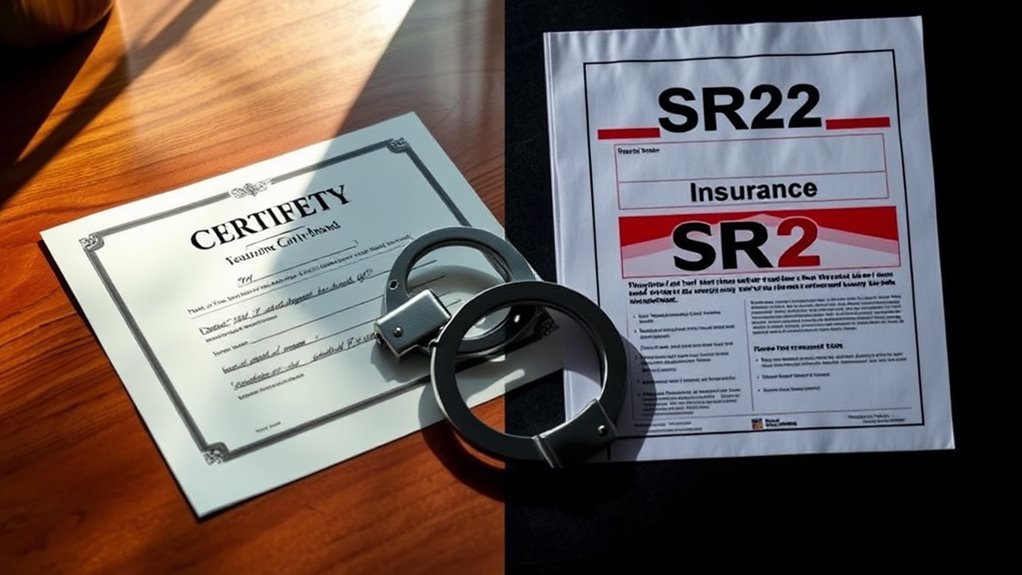
While maneuvering through the aftermath of a DUI, you'll encounter distinct legal requirements, primarily SR22 insurance and bonds.
An SR22 is a certificate proving you have the necessary insurance coverage to meet state minimums, typically required after a DUI conviction. Your insurance company files this form with the state, and the requirements vary by jurisdiction.
An SR22 certifies your insurance coverage meets state minimums, often mandated after a DUI conviction.
Bonds, on the other hand, serve a different purpose by ensuring financial responsibility, often utilized for higher-risk drivers. Unlike SR22, bonds don't require continuous insurance maintenance.
While both SR22s and bonds aim to protect public safety, the specific requirements and implications can greatly differ based on your state's regulations and your individual circumstances.
Risk Management Strategies: Insurance vs. Bonds
Understanding the differences between insurance and bonds is essential for effective risk management after a DUI. Both serve distinct purposes in mitigating risks, but your choice depends on your specific needs.
- Insurance absorbs potential losses, providing broad coverage for accidents and liability.
- Bonds guarantee compliance with obligations, protecting the obligee from non-performance.
- Cost implications vary, with insurance premiums greatly increasing post-DUI, while bond fees depend on creditworthiness.
In essence, insurance transfers risk to the insurer, while bonds guarantee contractual obligations are met.
Evaluating your unique situation will help you determine which option aligns better with your financial and legal responsibilities following a DUI.
Coverage Scope: What Each Option Protects
Two primary options, bonds and insurance, serve distinct purposes in the context of DUI-related financial protection.
Bonds primarily cover bail costs, ensuring your release from jail while awaiting trial. They require only a percentage of the total bail to be paid, offering flexibility.
In contrast, insurance doesn't address bail directly but becomes vital post-conviction, particularly with SR-22 requirements for high-risk drivers.
While insurance offers broader protection against unforeseen accidents and losses, it typically results in increased premiums after a DUI.
It's important to understand that bonds guarantee your court appearance, while insurance focuses on long-term liability, each addressing different aspects of financial obligations stemming from DUI incidents.
State Variations in Insurance and Bond Regulations

As DUI laws and regulations vary considerably across states, your approach to insurance and bond requirements can greatly impact your financial obligations and legal outcomes.
Understanding these state-specific regulations is crucial to maneuvering your situation effectively.
- BAC Limits: States like Utah enforce a stricter DUI BAC limit of 0.05%.
- Mandatory Penalties: Arizona imposes mandatory minimum jail time for first-time offenders.
- Insurance Forms: Florida requires specific SR-22 or FR-44 filings, affecting your premiums.
Each state's unique laws shape how DUI convictions influence insurance rates, coverage, and potential penalties.
Being aware of these differences can help you make informed decisions about your insurance or bond choices following a DUI incident.
Financial Responsibility and Liability Considerations
When maneuvering the aftermath of a DUI, it's essential to grasp the financial responsibility and liability considerations that come into play.
Depending on your state, you may need to file an SR-22 or an FR-44 to prove financial responsibility, often requiring higher liability limits. Insurance companies will handle these filings electronically, but be prepared for increased premiums.
A DUI conviction typically elevates you to high-risk driver status, leading to an average rate hike of 74%. Maintaining the mandated coverage is important; failing to do so can have serious legal repercussions.
Understanding these financial obligations can help you navigate potential costs and guarantee compliance with state laws effectively.
Impact of DUI on Policy Cancellations and Renewals
While a DUI conviction can trigger significant changes in your insurance policy, understanding how it affects cancellations and renewals is crucial for managing your coverage effectively.
Here are key points to evaluate:
- Increased Risk Perception: Insurers often classify you as high-risk, leading to potential policy cancellations or non-renewals.
- SR-22 Filing: A DUI may require an SR-22 form, complicating your insurance situation and increasing costs.
- Long-Term Implications: DUIs can impact your premiums and coverage options for years, as they typically remain on your record for 3 to 10 years.
Navigating these changes proactively is essential to minimize the negative impact on your insurance landscape.
Choosing Between Insurance and Bonds: Factors to Consider
Choosing between insurance and bonds for your DUI situation involves careful consideration of several factors.
First, evaluate your state's requirements; some mandate SR22 insurance, while others accept SR-22 bonds.
Consider your risk profile—drivers with DUIs may find it difficult to obtain traditional insurance, making bonds a viable alternative.
Cost is another critical factor; SR-22 bonds typically require a one-time fee, while insurance involves ongoing premiums that can escalate.
If you don't own a vehicle, an SR-22 bond may be more suitable.
Finally, think about the administrative ease; insurance companies often handle SR22 filings efficiently, freeing you from paperwork burdens.
Weigh these factors to choose the option that best fits your needs.
Conclusion
In conclusion, choosing between bonds and insurance for DUI situations hinges on your specific needs and financial circumstances. While insurance can skyrocket in cost, bonds offer a more manageable, one-time payment option. Remember, maneuvering through the legal maze can feel like trying to find Wi-Fi in a coffee shop—frustrating and confusing. Weigh the implications of SR22 forms versus bond compliance, and consider your risk management strategy carefully to make the best decision for your situation.